It’s been over a week since the sad news of Robert Redford’s passing reached the networks, the social media outlets, and a global community of broken hearts.
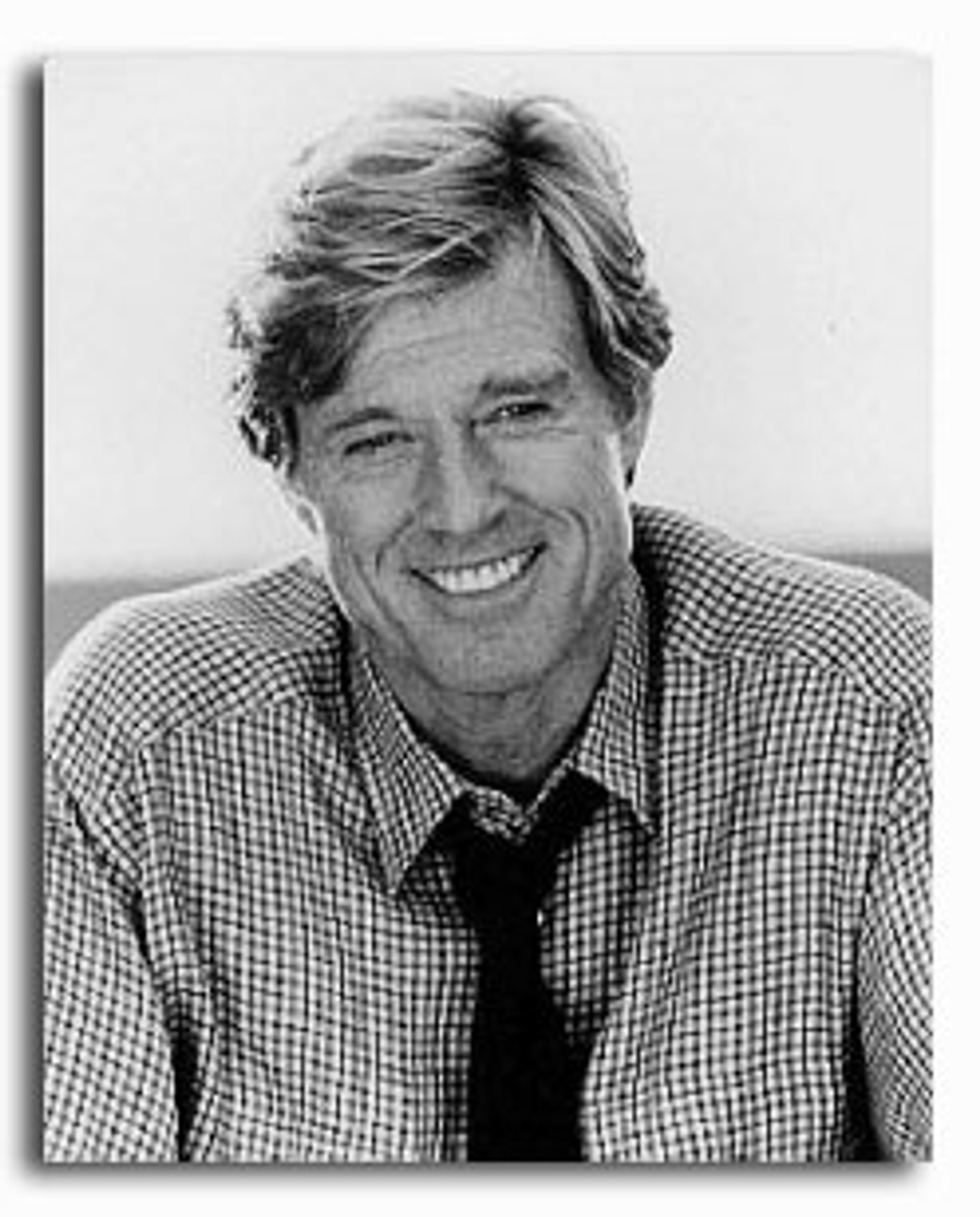
Like many, I cried real tears over his death—that’s how meaningful this man, this world-famous Hollywood star, was to me. With my being an undisputed daddy’s girl in a dysfunctional family, he was possibly the most significant role model in my life altogether, lacking any other serious male guidance.
And yet, I have not been able, or willing, to express in words why this man was so important to me.
The information overload made it hard to focus, and I knew I was not the one who would be writing the summary of his accolades, which is so vast that it’s difficult to even condense into one article. I did, for a moment, consider writing a defense of his acting skills and how he should have been awarded a posthumous honorary Oscar for his work as an actor, but then I found out that he had already been awarded an honorary Oscar in 2002 for his work. There went that story.
We have also heard numerous accounts of how Mr. Redford has impacted many working people in the movie industry, with Scarlett Johansson being one of his most prominent mentees. Inspired by him, she has finally stepped behind the camera and directed her first movie, Eleanor the Great, which premiered at the Cannes Film Festival in May 2025 and will be released in theaters this coming weekend (September 26).
So, what am I to say about Mr. Redford, whose path I have never crossed? What tribute can I make?
The story I am going to tell you has a lot to do with the content of his work in The Horse Whisperer.
The Horse Whisperer is, on the surface, a story about horses. But anyone who has read the book or seen the movie knows that it’s really about growing up in a broken family. The accident that Johansson’s character, Grace MacLean, experiences, and the injured horse, Pilgrim, that the mother, Annie MacLean, decides to keep despite the veterinarian’s advice to spare him the pain, symbolize her willingness to fight not only for Pilgrim’s survival, but also for her family’s. She knows that if the horse doesn’t make it, her family won’t either. And she can’t risk that.
The mother’s character reminded me of my mom (also a New Yorker), who would drive me to the horse stable for my riding lessons, but would always be late when picking me up in the evening. To this day, I can hear her keychain jingling when she finally showed up at the riding school, after all the other students had already been picked up, the horses put back into their stalls, and fed. My mom was busy working for my dad’s company. At the same time, Annie MacLean was the editor of a prominent New Yorker fashion magazine.
At the riding stable, on the one hand, I felt abandoned by my mom because I was always the last one to be picked up. On the other hand, I had found a second family. I loved sitting up there in the gallery overlooking the hall, and watching Renate, the riding teacher, jump her English purebred Laska over obstacles that seemed higher than I was tall. I was so impressed with her skill and her insistence on making it over the hurdle, even when Laska didn’t, that I couldn’t stop looking. And the owner, Mr. Keller, finally had the time to take out his beloved colt Robin and groom him—oh, how he spoiled him.
In the movie, Grace is embarrassed and broken because of her leg injury. She, herself, must learn to walk again, just like Pilgrim, her horse, has to learn to be a horse again and not a freaky monster.
Enter Robert Redford, aka Tom Booker, the horse whisperer, whom Annie has hired to “fix” Pilgrim. In the story, Booker understands, with the intuition of a blind man, that it’s the family that needs healing foremost.
I grew up in an alcoholic family. My father was a lifelong drinker. He liked alcohol so much that my mom had to buy a bottle of alcohol-free wine to serve him on his deathbed. It was one of his last wishes. God bless his soul. Even though I had harbored all this anger over his absence all these years (my mom used to call him “the ghost”), it almost makes me smile when I think of how he insisted on drinking wine when he was dying. That’s just who he was. My dad really loved wine. I can’t blame him for it anymore. After all, wine is one of the wonders of this world.
Still, when I was a teenager, I wished, oh, how I wanted my family to have a Tom Booker who came in and fixed us. Tom Booker never came, but The Horse Whisperer did—on TV. As a girl who loved horseback riding, it was a story made for me. It helped—a little.
But it wasn’t just the horses. It meant something that the actor who played Tom Booker was Robert Redford.
Redford was somewhat of a “familiar” figure in our family. My mom had once admitted that if I had been a boy, she would have named me Robert, after Mr. Redford. Of course, when my son was born, I had to transfer that name straight over to him. Even though he prefers to be called by his middle name, Max, today his first name is still Robert, as in Robert Redford. Funny, how the hair almost works.
But it wasn’t only my mom. My dad, who had little interest in Hollywood except for the occasional James Bond movie, was a self-taught piano player.
A virtuoso on the piano, he was deeply passionate about classical music. His favorite composer was Chopin. But all that music was terribly heavy and dramatic, like my dad, my mom, and my whole family conundrum, and the fighting.
I could tell, though, when my dad was in a good mood. When he was happy, he played The Entertainer by Scott Joplin. As many of you know, Scott Joplin wrote the soundtrack for the 1973 gangster film The Sting, which starred Robert Redford and Paul Newman.
This was one of the few things that my parents agreed upon: The Sting was one of the most brilliant stories ever made. And so, The Entertainer became a household tune when there was joy in the house, which, admittedly, was rare.
My mom was infatuated with Out of Africa when it came out and watched it with me. Of course, I immediately became infatuated with it, and the handsome-looking Denys Finch, too. The fact that one of the lead tunes of Sydney Pollack’s masterwork was a Mozart symphony, again, hit home. Classical music was a part of our family culture, a love language, and Mozart was one of my dad’s favorites.
When my dad died and I had to clear out his apartment, I packed boxes after boxes of multi-CD trays for his carousel player—all stuffed with recordings of classical music. It would not have been difficult to divine what my father’s other passion was, judging from his boxes: classical music.
I believe Mr. Redford must have had a soft spot for classical music, too, or maybe it was just his Tom Booker character in The Horse Whisperer, whose love of his life was a classical violinist who couldn’t live in Montana because she needed to play in the city.
It was classical music that brought my parents together. My mom, an unlikely rebel during the late fifties for having lived with a roommate in New York City instead of with her family in the suburbs, was working as an office assistant at the time.
My dad, meanwhile, had been studying at a university, earning his MBA while working for BASF. On the weekends, he and his buddy would hit the city.
One day, my mom’s roommate came to her and said, “Hey, my friend knows this guy who always has tickets to the Met. Do you want to go?”
My mom accepted the invitation. The guy with the tickets was my dad. It’s a love story that’s hard to beat, even if it wound up being a dysfunctional one. I yet have to write mine.
The dysfunction in my family and the emotional intoxication became unbearable to me as an adult, so I decided to move to Los Angeles to pursue my own dreams.
One of my dreams was to write a story for Mr. Redford and have him march into my mom’s apartment, in a sort of revenge act, a kind of payback for my dad’s misogyny toward my mom.
That never happened. The story that I wrote needs to be “fixed”—like so many of my stories, and maybe even, my life.
Still, one thing is sure: In a life that has seen so much dysfunction, misogyny, and disrespect, Robert Redford’s influence has been healing. It is maybe even thanks to Mr. Redford that I can appreciate my family a little bit more today and laugh about it.